What is the difference between Ultherapy, Thermage and Shurink?
The main difference is the type of energy and the information available during treatment. Ultherapy and Shurink Universe focus ultrasound at selected points, whereas Thermage FLX delivers heat through monopolar radiofrequency. All three are marketed under the broad label of lifting, but their mechanisms and product-specific evidence are not interchangeable.
The table aligns public information from the three manufacturers as checked on 2026-09-23. Before asking which treatment goes deeper, compare the exact model, whether imaging is used, the cartridge or tip, and the area being treated.
| Item to check | Ultherapy | Thermage FLX | Shurink Universe |
|---|---|---|---|
| Energy | Visualization-guided focused ultrasound (MFU-V) | Monopolar radiofrequency (RF) | High-intensity focused ultrasound (HIFU) |
| Feature stated in official materials | DeepSEE imaging shows tissue below the skin and treatment depth | RF delivery through a tip, with cooling and vibration | Facial cartridges for several depths and treatment modes |
| When reading a study | Check that the Ulthera system was used | Check the Thermage model and tip | Check that the study tested Ultraformer MPT itself |
| Question for the consultation | Who reads the image and chooses depth? | Which tip, pulse count and treatment area will be used? | Which model, cartridge, mode and shot count will be used? |
Start with the different conditions, not a depth ranking. If the model, area and delivery unit differ, quotations with the same treatment name are not directly comparable.
Are Ultherapy and Shurink the same HIFU treatment?
They belong to the same ultrasound family, but they are not the same product. Ultherapy is the Ulthera system, which uses DeepSEE imaging to view tissue and treatment depth. Shurink Universe is a separate device called Ultraformer MPT. Its facial cartridges, delivery modes and product-specific clinical evidence must be assessed separately.
That distinction matters when reading research. The direct comparison cited here enrolled 20 people and treated one side of the face with Ultherapy-type MFU-V and the other with monopolar radiofrequency. It did not test Shurink, so its findings cannot be rephrased as ‘all HIFU devices have similar results and pain.’
HIFU names an energy method; Ultherapy and Shurink name different products. Their evidence needs to be checked separately.
Do Ultherapy and Shurink really reach the SMAS layer?
Saying ‘4.5 mm equals the SMAS’ is easy to understand, but it can make the face look like one flat, uniform sheet. A recent cadaveric and histological study found that researchers have not used one consistent definition of the SMAS and that parts of the central face did not show a clearly continuous layer. Muscle, fascia and fat are arranged differently by facial region and by person.
A consultation should therefore go beyond ‘Does it reach the SMAS?’ Ask how tissue thickness is judged in that area, why a particular cartridge is selected, and how bone, nerves and vessels are avoided. The official Ulthera instructions likewise describe imaging as a way to confirm appropriate depth and avoid bone.
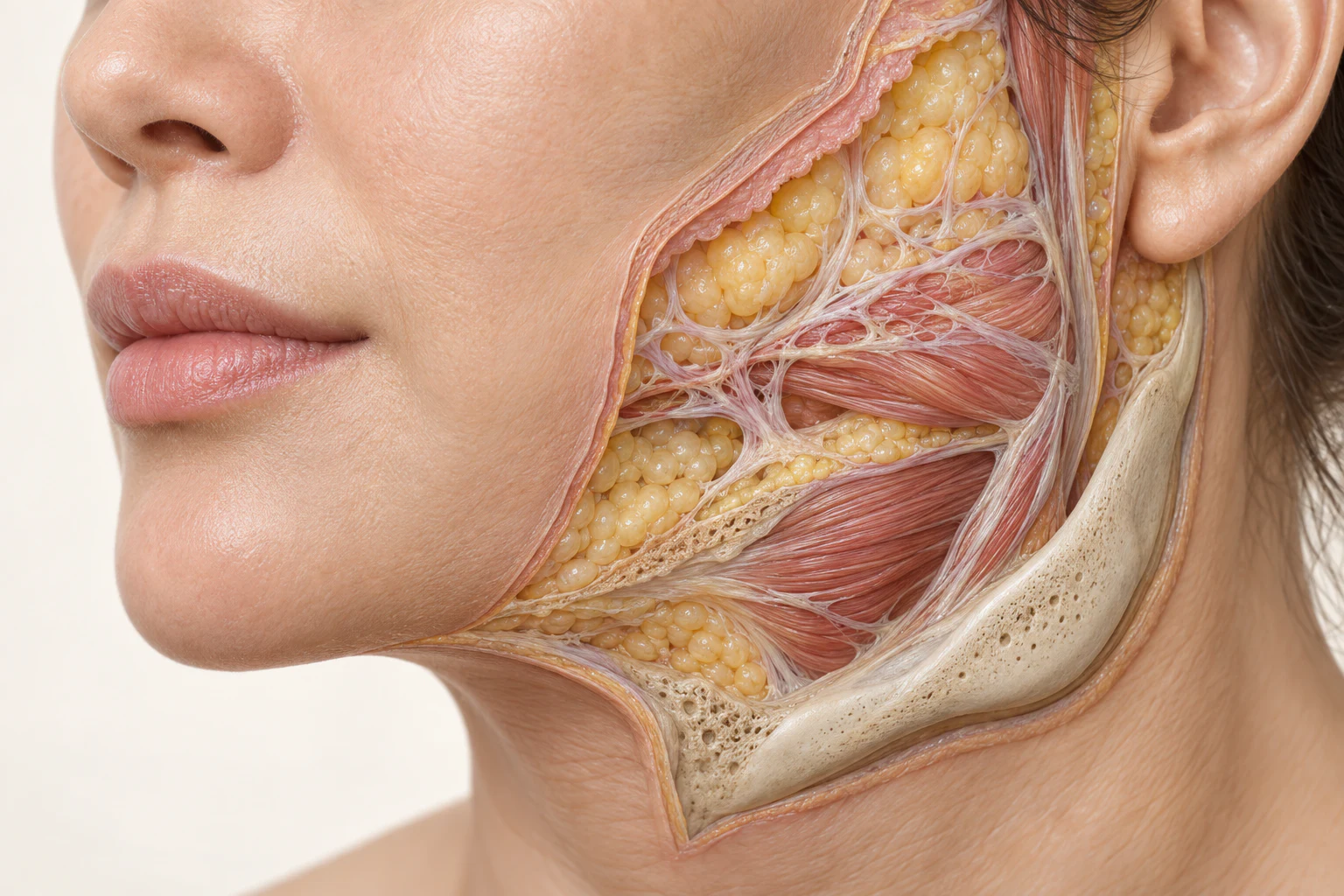
A depth number is only a starting point. To compare treatment plans, ask why that depth was chosen and how nearby structures will be avoided.
How should Ultherapy, Thermage and Shurink duration and treatment intervals be judged?
No single rule such as ‘every six months’ or ‘once a year’ was confirmed for all three treatments. The 20-person trial followed Ultherapy-type MFU-V and monopolar radiofrequency for six months. Measures improved with both methods, but no significant difference between them was found. That study alone cannot tell us how long results lasted after its six-month endpoint.
A proposal of every 24 months for ages 30–45 and every 12 months after age 50 appears in one expert consensus. The source presents it as an individualized proposal rather than a comparative trial proving age-based intervals. It should also be read alongside disclosures that some authors had consulting, speaking or research relationships with the relevant manufacturer.
| Question | What current evidence supports | What it does not support |
|---|---|---|
| Is MFU-V or monopolar RF better? | No significant difference between the two methods over six months in a 20-person trial | A conclusion that no device is better for every patient |
| Does Shurink have the same result? | It is classified in the same HIFU energy family | Applying Ultherapy findings on results, pain or duration directly to Shurink |
| Is retreatment timing determined by age? | Skin condition, prior treatment and goals need individual assessment | Fixing a one- or two-year interval from age alone |
If you are given a retreatment interval, ask whether it reflects your response to prior treatment, current condition and goal rather than age alone.
Ultherapy vs Thermage pain: which one hurts more?
In the 20-person direct comparison, Ultherapy-type MFU-V was rated as more painful during treatment than monopolar radiofrequency. That finding should not be applied to every Ultherapy or Thermage session, and it does not describe Shurink pain. Treatment area, energy settings, cartridge or tip, delivery count and pain control can all change the experience.
Do not judge recovery from a ‘no downtime’ slogan alone. Ulthera instructions list redness, swelling and pain separately from temporary nerve-related effects, while Thermage safety information describes mild to moderate pain as a common response during treatment. If you have an important event, first ask what reactions to expect and when the clinic wants you to contact it again.
- Pain-control plan
- Ask whether topical anesthetic or pain medicine is used and whether it costs extra.
- Same-day reactions
- Ask what degree of redness, swelling and tenderness is expected.
- Scheduling
- If you have a photo shoot or event, choose the date after hearing the recovery guidance.
- Unexpected reactions
- Get written instructions on symptoms that require prompt contact, such as sensory change, weakness or a suspected burn.
Can I have a lifting treatment if I am pregnant or have fillers or a pacemaker?
First separate a contraindication from a condition that has not been adequately studied. Ulthera instructions list open wounds or lesions in the treatment area, severe or cystic acne, and active implants or metal implants in the treatment area as contraindications. Pregnancy, breastfeeding, anticoagulant therapy and some medical conditions are described as unstudied or requiring separate caution.
Thermage lists electrical implants such as pacemakers and implanted defibrillators as contraindications. It separately identifies filler-treated areas, pregnancy or breastfeeding, diabetes and autoimmune disease among situations not studied. For Shurink, check the official instructions for the exact model used by the clinic instead of substituting a contraindication list from another HIFU product. Tell the clinic about your medical history, medicines, implants and previous fillers before treatment planning.
Why do Ultherapy, Thermage and Shurink prices vary by clinic?
Quotes often cover different conditions. Align whether the plan treats the full face or only the jawline and submental area, which model and cartridge or tip it uses, and whether delivery is counted in shots, lines or pulses. If anesthesia, consumables, aftercare or tax is separate, the first advertised price is not the total cost.
More shots do not automatically mean a better treatment. What matters first is who assessed the area and how the count follows the plan. Ask for the product name, treatment area, delivery unit, included services and possible additional charges as separate lines on the quotation.
Compare what is included, not only the lowest number. The same product name can describe different quotes when the area, tip, cartridge or delivery unit differs.
What should I ask during an Ultherapy, Thermage or Shurink consultation?
If you only ask ‘Which one is good for me?’, the reason behind the recommendation is easy to forget. Ask every clinic the same questions and record the answers so you can compare treatment plans and total costs rather than brand names.
- Why this treatment?
- Start with the expected change and limitations for your area of concern.
- What is the exact product?
- Confirm the model, cartridge or tip and delivery mode, not just the brand.
- Where and how much?
- Ask how depth, delivery units and areas to avoid were planned for each region.
- Who plans and performs it?
- Check whether the consultation and treatment plan are made by the person who performs the procedure.
- What should I disclose?
- Tell them about medical conditions, medicines, implants, prior fillers and your current skin condition.
- What is the total cost?
- Confirm anesthesia, consumables, aftercare, tax and possible extra charges together.
After the explanation, check that the model, area and delivery unit appear exactly as discussed on the quotation.
How should I compare Ultherapy, Thermage and Shurink clinics in Gangnam?
Owning a product is not enough to choose a clinic. Compare the treating clinician, exact model and treatment scope, consultation explanation, risks and aftercare, price and additional charges in the same order using each clinic’s official information. If an answer is not found publicly, leave it pending instead of declaring that the service does not exist.
This guide does not recommend a particular clinic because it does not yet contain clinic-level source data. Gangnam Beauty Check creates recommendations only after all 15 public-information checks are complete for the candidates, and review counts or star ratings do not change the order. The score measures completeness of published information, not clinician skill or an individual patient’s outcome.
Without a clinic comparison table, this guide does not declare a number one. When candidate evidence is complete, the check date and original sources will be published with it.
Frequently asked questions
Can Ultherapy and Thermage be done together?
There is no single combination or order that suits everyone. The 20-person study cited here used the two methods on opposite sides of the face; it did not establish the dose, order or interval for combined treatment. Ask a clinician who has reviewed your current condition and treatment history why a combination is being proposed.
Is Thermage better than Ultherapy for a thin face?
Low facial fat alone does not establish that Thermage is always the better option. The arrangement of skin, fat and muscle, the target area, the goal and structures to avoid all matter, so do not choose a product from that single feature.
Is 600 Ultherapy shots better than 300?
Six hundred shots are not automatically better than 300. Shot count only becomes meaningful alongside the treatment area and size, transducer and line-placement plan. Ask to see the distribution plan rather than comparing one number.
Is Shurink less effective than Ultherapy?
The sources checked for this guide do not establish a ranking between the two products. The 20-person Ultherapy-versus-radiofrequency trial cannot be reinterpreted as evidence about Shurink. Check whether a comparison uses evidence on Ultraformer MPT itself.
Which symptoms after a lifting treatment mean I should contact the clinic?
Follow the instructions from the clinic that treated you. Contact it promptly for unusual symptoms such as a suspected burn or blister, persistent sensory change or weakness. Official Ulthera instructions distinguish burns and blisters from nerve-related adverse effects.
Why does this guide not rank Gangnam lifting clinics?
Clinic-level source data have not yet been compared under one standard. Gangnam Beauty Check ranks only candidates with all 15 clinician, treatment, explanation, aftercare and cost checks complete, and it does not fill gaps with review counts or star ratings.
Sources and review dates
- Randomized split-face trial in 20 people comparing monopolar radiofrequency with visualization-guided focused ultrasound (PMID 30531187, 2019)Checked on
- Pan-Asian expert consensus on individualized MFU-V treatment, including disclosed author conflicts (PMCID PMC8211327, 2021)Checked on
- Ulthera System Instructions for Use: indications, imaging, contraindications and precautions (Ulthera, Inc.)Checked on
- How Thermage FLX works, indications and important safety information (Solta Medical)Checked on
- Ultraformer MPT product specifications and cartridges (CLASSYS)Checked on
- Korean regulatory approval history for Shurink Universe (Ultraformer MPT) (CLASSYS)Checked on
- Cadaveric and histological study revisiting the definition and regional variation of the SMAS (PMCID PMC11027987, 2023)Checked on
- Ultherapy vs Thermage: comparing two nonsurgical lifting approaches (Korea Beauty Report)Checked on
- How the procedure-specific public-information score is calculated (Gangnam Beauty Check)Checked on
Editorial responsibility and relationships
Gangnam Beauty Check received no writing fee, advertising payment or sponsorship from any device manufacturer or medical provider mentioned in this guide. Manufacturer materials were used only to check product specifications and official safety information, not to claim that one treatment is superior.
Medical review: None
This article is for information and does not replace an individual diagnosis or medical consultation.
Related topics
How to Spot a Clinic Broker: Five Warning Signs in Public Records
Referral requests, cash rebates, false insurance coding, conditional discount ads, and unclear affiliation: five warning signs checked against Korean public records and court decisions.
Read guideGangnam Dermatology Top 5: Can Reviews Alone Be Trusted?
What should you check beyond reviews and ratings in Gangnam dermatology Top 5 lists? This guide covers clinicians, procedures, equipment, consultations, aftercare, and cost terms in official sources.
Read guide